
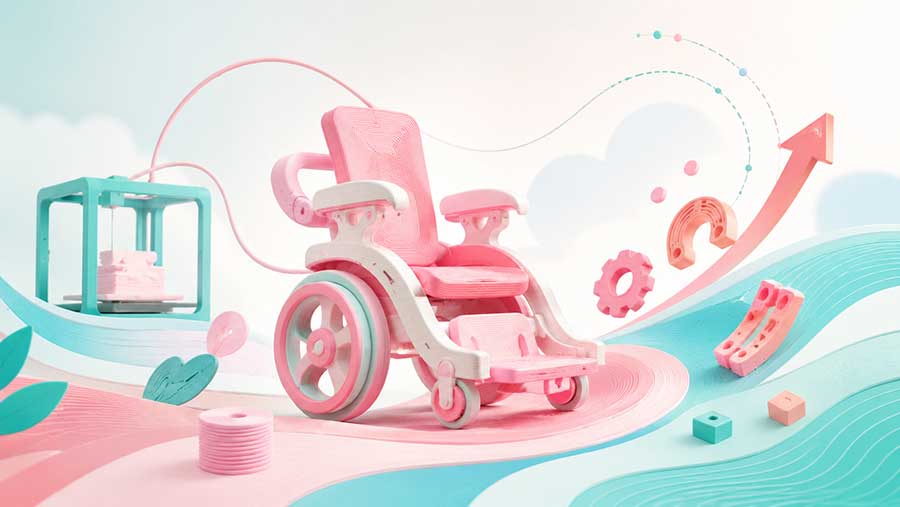
A 3D-printed mobility chair gives a toddler more independence
When 2-year-old Amelia Aiken, who has cerebral palsy, needed a mobility chair, a University of Tennessee at Chattanooga engineering student stepped in. Austin McDade used an open-source design to 3D-print and assemble a child-sized mobility chair that gives Amelia a new way to explore her surroundings independently.
The project also shows what affordable, customizable 3D printing can bring to assistive technology – especially when families face long waits for equipment their children need.
Where music, disability and assistive technology meet
Harvard researchers recently turned an assistive technology showcase into something a little more fun: a concert.
Abilities: Amplified brought together musicians with disabilities, researchers, startups and disability organizations for a free Boston event attended by about 1,000 people. Visitors could hear performances while also trying wearable robotics and other technologies designed to support mobility and rehabilitation.
It’s a great example of assistive technology being developed and demonstrated alongside the people it is actually meant to serve.
Glydr puts more gaming controls at your feet
Glydr is a programmable foot controller that lets PC and VR gamers move up to 16 different actions from their hands to their feet. That could be particularly useful for some players with limited hand function, fatigue or repetitive-strain issues who want another way to control a game.
A new beta feature makes Glydr even more flexible by allowing it to work alongside a traditional gamepad as one combined controller. Players can keep using the buttons and sticks they already know while assigning additional controls to their feet.
 100% free & spam-free. Unsubscribe any time.